
Catholic bishops back Jewish homeowner’s religious liberty case before Supreme Court
Daniel Grand’s dispute with an Ohio city over a home prayer group has reached the high court, with the U.S. Conference of Catholic Bishops supporting his claim that a legal “finality” rule blocks religious freedom lawsuits.
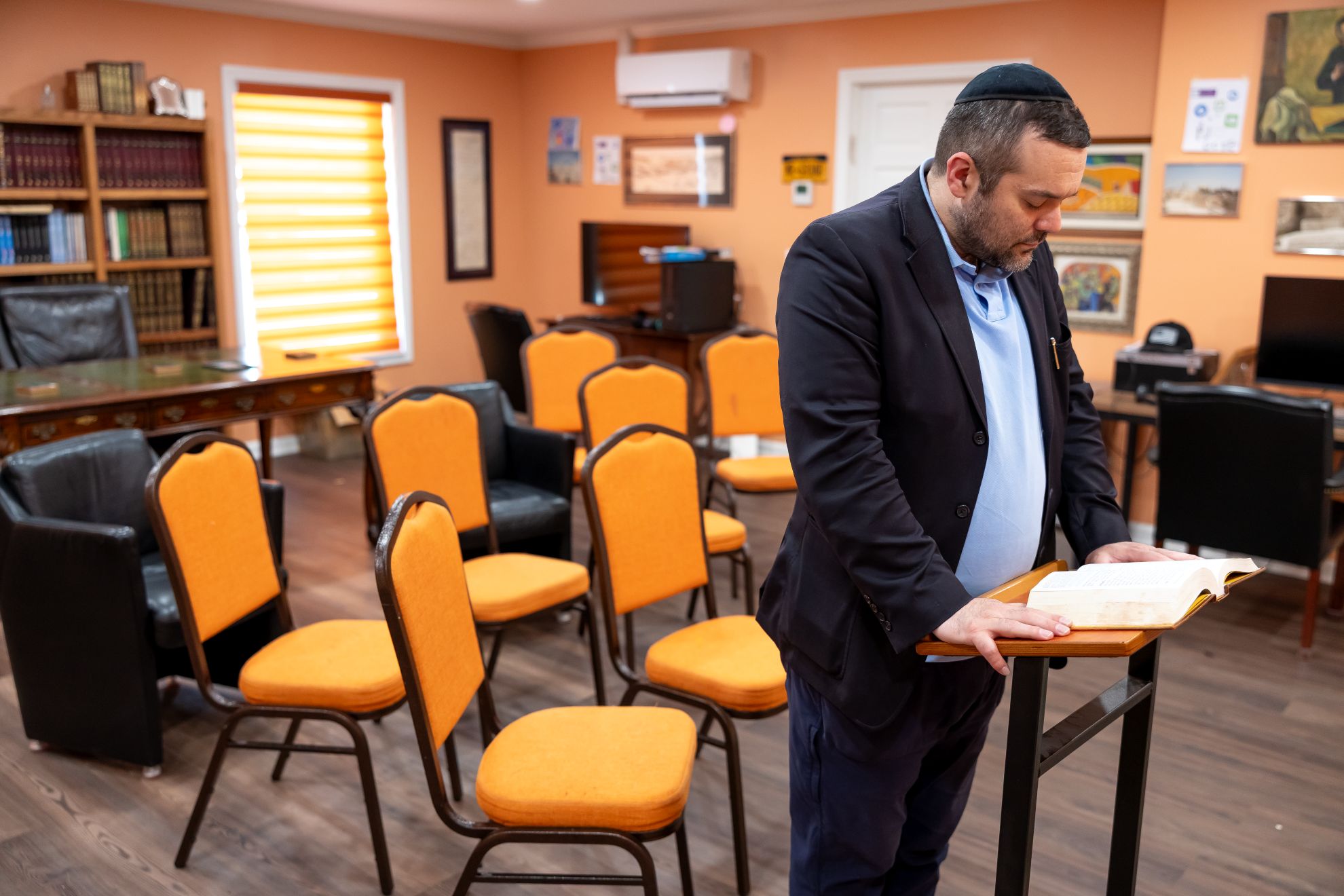
The U.S. Conference of Catholic Bishops has thrown its support behind a Jewish man’s religious liberty lawsuit against an Ohio city, as the case heads to the Supreme Court over a procedural rule that critics say can be used to indefinitely delay legal challenges.
Daniel Grand sued the city of University Heights, Ohio, in September 2022 after officials told him he needed a special-use permit to host a minyan, or Jewish prayer group, of about a dozen friends at his home. Grand later learned that the permit, if granted, would not allow any residence on the property, effectively forcing his family to move.
A federal district court dismissed Grand’s case based on a legal doctrine known as “finality,” which requires plaintiffs to exhaust all administrative options before suing. The U.S. Court of Appeals for the 6th Circuit upheld that dismissal. Grand and his attorneys are now asking the Supreme Court to decide whether the finality rule can be used to block religious liberty claims from ever reaching court.
Faithful news, every morning.
Biblical truth. Timely stories. Encouragement for your day.
Free, in your inbox. No spam, ever.
Your word is a lamp to my feet and a light to my path.
Psalm 119:105
Jonathan Gross, an attorney for Grand, said local governments can exploit the finality rule to prevent lawsuits from moving forward. “If local government can do whatever they want with your application and make it so you never get a final decision, then you’re ultimately blocked from ever suing them, and they know that,” he said. Gross argued that Grand was harmed but could not even get his day in court because no final decision was made.
In a filing with the Supreme Court, Grand described the situation as “a playbook for government-sponsored religious discrimination.” The U.S. Conference of Catholic Bishops filed an amicus brief in support of Grand, arguing that religious plaintiffs should have standing to sue “as soon as a credible threat arises” and that lengthy finality processes themselves constitute a “constitutional harm.”
Grand told reporters that his intention was never to turn his home into a synagogue, but simply to host a small prayer gathering. “It was on my heart to have a prayer gathering, and I thought nothing more than that,” he said. A favorable Supreme Court ruling could open the door for other religious plaintiffs who have been blocked from federal court by the finality requirement.
This article was independently written by Christian Newsline based on the linked reporting.