
Indian Catholics demand land rights in Kerela state
Following the state's recent leadership transition, Catholic leaders and hundreds of impacted families in Kerala are urging the newly elected government to permanently restore their land ownership rights and resolve a long-standing property dispute with the state Islamic Waqf Board.
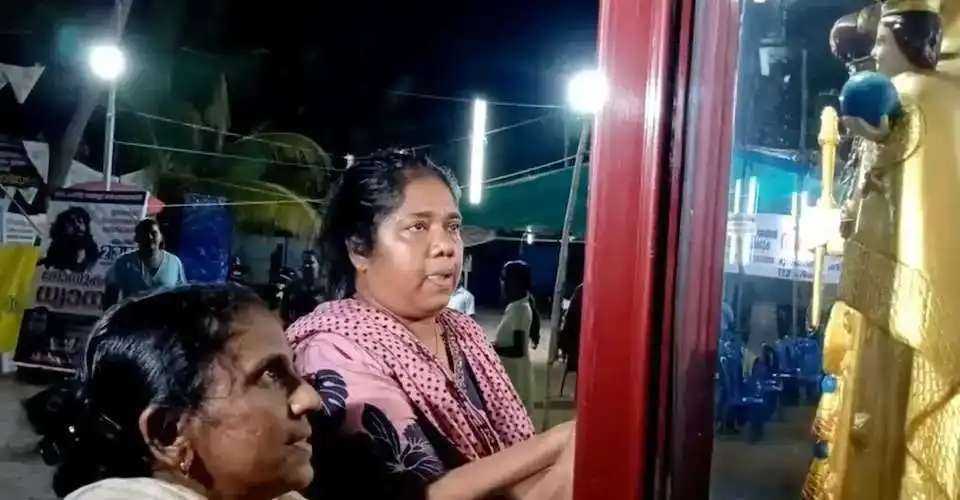
Catholic organizations and church leadership in the southern Indian state of Kerala are mobilizing to demand definitive action from the newly elected state government. The growing crisis centers on Munambam village in Ernakulam district, where approximately 610 families—predominantly Latin Catholics belonging to the marginalized coastal fishing community—face the threat of displacement. The land rights of these residents were thrown into legal limbo following claims asserted by the Kerala State Waqf Board, an official statutory body that oversees Islamic charitable properties.
According to UCA News, the historical roots of the dispute date back decades, with residents having legally purchased their land plots between 1988 and 1993 from Farook College, a local Muslim educational institution. The buyers paid prevailing market rates and possessed government-registered land deeds, giving them no reason to doubt the security of their holdings. However, the situation shifted dramatically after a government-appointed commission arbitrarily classified the acreage as Islamic charitable property (waqf), an administrative decision that local landowners only discovered years later.
The administrative impasse reached a boiling point when the state revenue department ceased accepting land tax payments from the Munambam residents, acting on the Waqf Board’s counterclaims. According to church officials cited by UCA News, this regulatory freeze stripped the vulnerable families of basic revenue entitlements, leaving them unable to secure home loans, sell their properties, or obtain official community certificates. To defend their ancestral homes, the families launched a historic, 414-day continuous relay hunger strike, which drew widespread attention to their plight before being suspended following a temporary court order.
Faithful news, every morning.
Biblical truth. Timely stories. Encouragement for your day.
Free, in your inbox. No spam, ever.
Your word is a lamp to my feet and a light to my path.
Psalm 119:105
While the Kerala High Court issued an interim ruling that temporarily restored revenue rights and concluded that the land did not belong to the Waqf Board, the legal battle remains far from over. The Waqf Protection Forum subsequently challenged that ruling, taking the jurisdictional dispute to the Supreme Court of India. With the legal trajectory tied up in protracted court proceedings, local clergy, including Father Antony Xavier of the Valankanny Matha Church, have expressed serious concern that judicial delays will continue to prolong the immense economic and psychological distress felt by the community.
In response to the unresolved threat, the Kerala Regional Latin Catholic Council (KRLCC) and other Catholic advocacy bodies are utilizing the post-election transition to seek a permanent political solution. Church leaders emphasize that these poor fishing families acted entirely in good faith and invested their life savings into their homes. They argue that a swift, empathetic legislative intervention by the newly formed state government is essential to bypass judicial gridlock, protect minority livelihoods, and preserve the long-standing interfaith harmony of the region.