
Massive cultic stone may point to King Hezekiah’s religious reforms, researcher says
A 750-kilogram standing stone discovered in an Israelite mansion destroyed by the Assyrians could lend weight to biblical accounts of King Hezekiah’s push to centralize worship in Jerusalem.
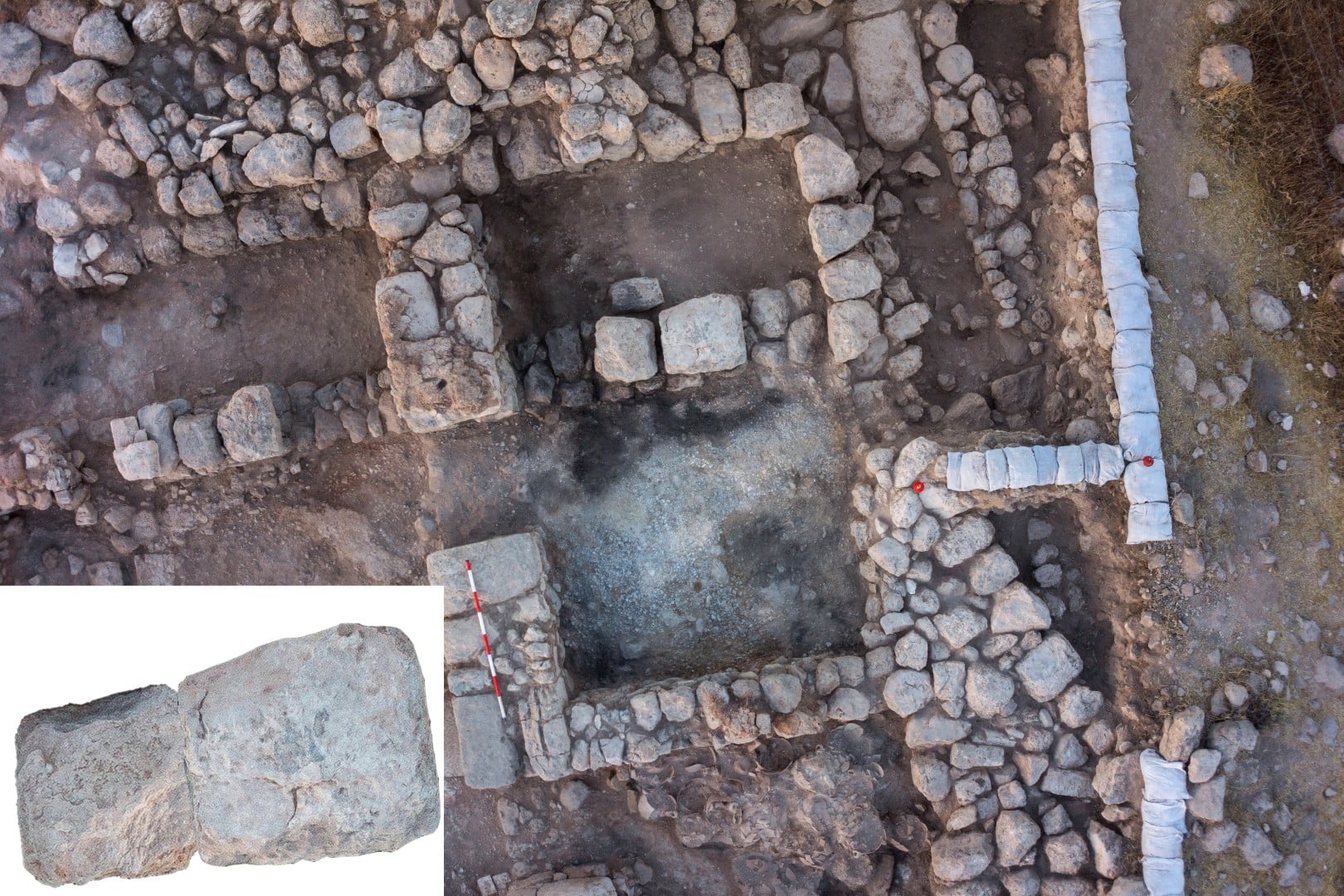
A newly published study suggests that a large standing stone discovered in an ancient Israelite house may provide fresh evidence for the historical reality of King Hezekiah’s religious reforms, as described in the Bible. The artifact, known in Hebrew as a massebah, was found at the site of Tel ‘Eton in the Judean lowlands of southern Israel.
The stone measures about 1.4 meters in height and weighs roughly 750 kilograms. It was unearthed in two pieces that fit together, and was found incorporated into a platform in the largest room of a typical Iron Age four-room house. The building was destroyed by the Assyrians in the late eighth century BC.
Bar-Ilan University professor Avraham Faust, author of the study published in the Jerusalem Journal of Archaeology, told The Times of Israel that the stone’s size and shape strongly identify it as a cultic massebah. Such standing stones were common in ancient Near Eastern religious practice and are mentioned in the Bible.
Faithful news, every morning.
Biblical truth. Timely stories. Encouragement for your day.
Free, in your inbox. No spam, ever.
Your word is a lamp to my feet and a light to my path.
Psalm 119:105
Faust believes the stone may have been taken down and reused as building material during Hezekiah’s reign, when the king reportedly ordered the removal of local altars and standing stones to centralize worship at the Temple in Jerusalem. The biblical account in 2 Kings 18:4 says Hezekiah “smashed the pillars,” a reference to massebahs.
While some scholars question whether Hezekiah’s reform actually occurred, Faust argues that the Tel ‘Eton stone offers a possible domestic example of such changes. Most previous archaeological evidence has come from public temples and shrines at sites like Lachish, Arad, and Beersheva, where the number of examples remains small.
The stone was found lying flat and had been carefully incorporated into a platform, rather than being smashed. Faust noted this suggests the inhabitants may have treated it with respect even after removing it from its original upright position. A cooking pot was found on the platform at the time of the building’s destruction.
Radiocarbon dating indicates the house was first built in the late 11th or early 10th centuries BC. The building underwent several phases before its destruction, likely during the Assyrian campaign of 712 BC. Faust said the room where the stone was found appears to have been used by the patriarch and matriarch of a multigenerational family in its final years.
Faust acknowledged that it remains unclear whether the room was exclusively used for religious purposes when the stone was still standing. He added that further study of domestic architecture in Judah may yield additional clues about the extent of Hezekiah’s reforms.
(Picture courtesy of the Tel 'Eton Archaeological Expedition)
This article was independently written by Christian Newsline based on the linked reporting.